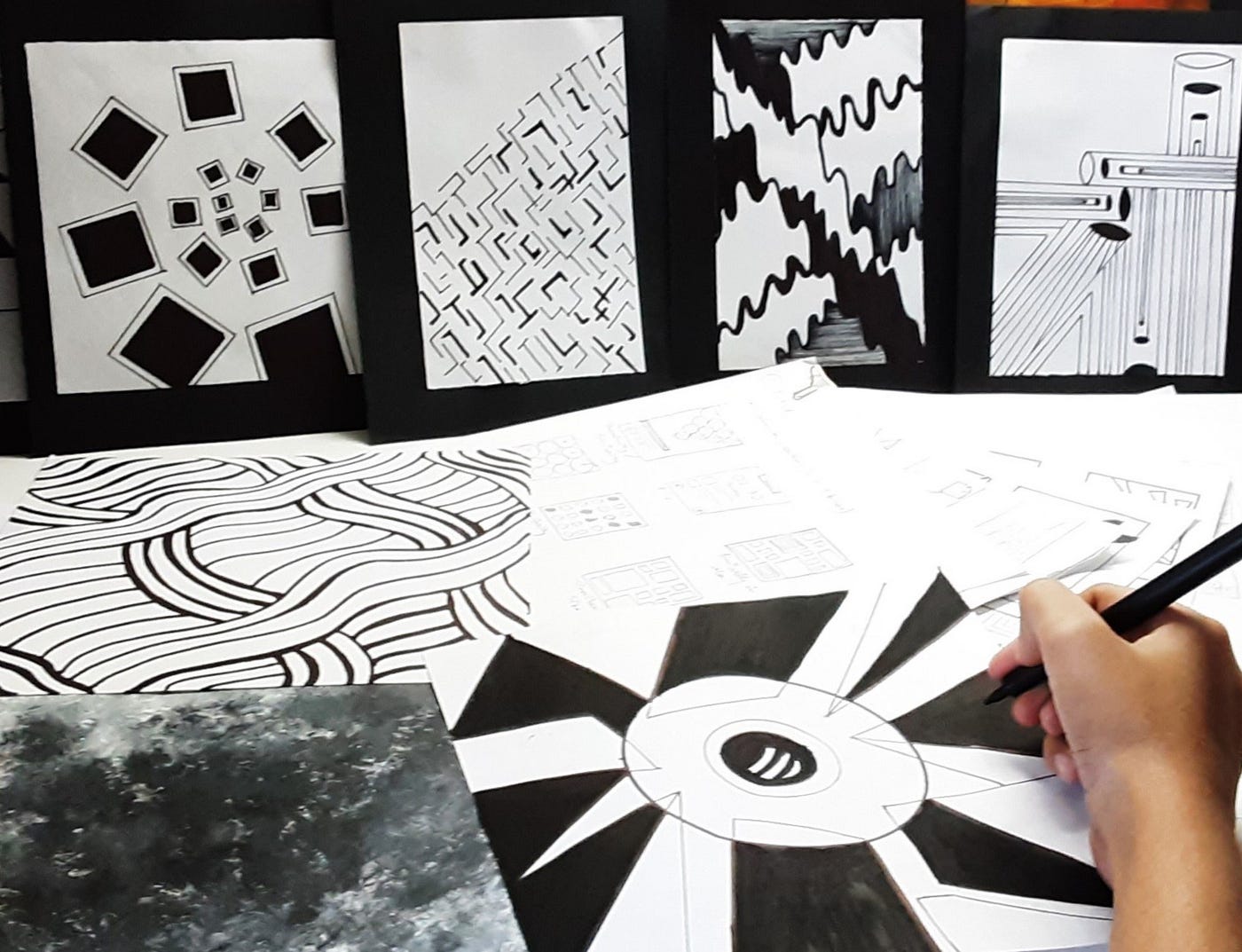
The Elements of Design include:
- Lines: used to separate or create space in a design and to create a focus point.
- Color: used to create a certain mood as well as combining colors.
- Shape: used to create a sign or symbol in a design and each shape comes with its own characteristic.
- Texture: used to add realistic qualities to a design whether traditionally or digitally.
- Size and Scale: used to balance or contrast a design. Also shows how far, close, big, or small subjects are.
- Direction: used to direct the viewer's attention to a certain spot as well as creating the illusion of movement.
- Proximity: used to point out different points of interest for the audience to look at.
- Balance: used to stabilize the design whether it's symmetrical or asymmetrical.
- Alignment: similar to balance, used to organize your design and can also be symmetrical or asymmetrical.
- Repetition: used to put an emphasis on a certain subject and is visually appealing while still being organized.
- Contrast: used to make elements stand out with each other and makes a design visually appealing.
- Space: used with the different elements of design to be able to connect together and create a design that can be put together by the viewer.
The Elements and Principles of Design are a set of guidelines that artists have to follow when creating their designs. It is important to have and understand these guidelines and references so that artists can create a design that appeals an audience.
I can start using these elements and principles by looking back at my old art and pointing out where I lack in those guidelines. If I realize a drawing of one of my characters is tilted too much to the right and the color pallet is too strong after I compare the guidelines to my work, I'll be able to revise my design and put it out again. Self-critiquing, getting a second opinion, and then revising my work would help me understand the elements and principles.